
"Kenya export volume"
200 article(s) found

Notes on coffee hand brewing in Kenya Coffee export annual output and sales volume introduction
Notes on coffee brewing in Kenya annual output and sales volume of coffee exports this stage requires a total of 6 concentric circles. After the smallest flow of water is injected into the center point by hand for 2 seconds, the concentric circle is around the first circle, and then each concentric circle is enlarged 1 turn accordingly. To the fifth concentric circle, about 12.5px away from the wall of the filter cup, all powder layers will be wet to water and washed away. Then, again.

Latest news from coffee producing areas in Kenya transaction volume at auction of Kenyan coffee bean market price rose
For more information on coffee beans, please follow the coffee workshop (Wechat official account cafe_style) Coffee revenue in Kenya increased by 93% at the end of February compared with the same period last year, as good prices, high sales and weakness in the shilling (Kenyan currency) pushed up exports. According to a market report by the Nairobi Coffee Exchange (NCE), coffee beans are at 2. 5 percent.

Uganda exports coffee
Uganda, Kenya and Tanzania are major coffee exporters in Africa and the world. Coffee produced in this region is of excellent quality and is a traditional export product. It is also an important source of foreign exchange. Read the material and answer the following questions with relevant knowledge. Table 1 Climate and Coffee Export Volume of Uganda, Kenya and Tanzania Annual Average Temperature (℃) Monthly Maximum Temperature (℃)

Introduction to the Export of Niya Coffee the Central Mountain region of Nyeri Ethiopia
The increase in the number of Niya coffee is obvious. From 1969 to 1970, 800000 bags were exported, and from 1985 to 1986, the export volume increased to 2 million bags. Production is now stable at 1.6 million bags, with an average yield of about 650kg per hectare. The average price of coffee in Kenya has been rising before the price of coffee has skyrocketed in recent years. Prices from 1993 to 1994 were 50% higher than they were 12 months ago.
Coffee beans from Sika, Kenya: a description of the characteristics and flavor of Kenyan coffee from the African continent
Kenya Sika is one of the well-known producing areas in the second largest coffee producing country in Africa. Compared with coffee beans in other Kenyan producing areas, it not only has obvious tomato tonality, but also has some unique characteristics. The treatment method of raw bean is mainly water washing, the grading method is graded by particle size, and its practical value is determined by cup test. The highest grade of coffee beans is AA (left at 7.2m

Kenya Coffee Bean Flavor description Grinding degree introduction to the characteristics of fine coffee beans
The Kenyan government takes the coffee industry very seriously, where it is illegal to cut down or destroy coffee trees. Kenyan coffee buyers are world-class high-quality coffee buyers, and no other country can grow, produce and sell coffee on a continuous basis like Kenya. All the coffee beans were first acquired by the Kenya Coffee Commission (CoffeeBoardofKenya, CBK).

Introduction to the characteristics of coffee flavor and taste of Burman Manor in Kenya with balanced and delicious acidity
Kenyan coffee beans the Kenyan government takes the coffee industry very seriously, where it is illegal to cut down or destroy coffee trees. Kenyan coffee buyers are world-class high-quality coffee buyers, and no other country can grow, produce and sell coffee on a continuous basis like Kenya. All coffee beans are first made by the Kenya Coffee Commission (CoffeeBoardofKenya, CBK for short)

The species, brand recommendation and manor of Cabaret hole fish in Kenya washed AA Krinyaga producing area
Professional baristas Please follow the Coffee Workshop (Wechat official account cafe_style) the fresh coffee fruits of this batch of hole fish AA are picked and processed by 250 farmers in the Kongyu processing plant under the jurisdiction of the Kabare farmers' cooperative. After peeling, fermenting and cleaning the coffee from the nearby Kongyu River, the coffee will be used in an African drying bed for drying. Every picking season, farmers are going to
Kenya Coffee Bean Flavor History Development Story| Kenya NCE and its Marketing Operation System
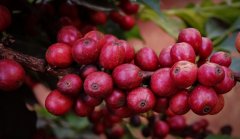
caramel. Pomelo. Coke. ripe tomatoes. Red grapes. Bright. Plum. Sweet. Delicious. apricot. pineapple. Passion fruit. Chocolate. We all know Kenyan coffee is one of the most complex coffees in the world, but they are also the most complex thanks in large part to the country's unique chain of custody, marketing processes and logistics. Kenya has no coffee history in its north

Difference, distinction and award-winning situation of Cabaret hole fish in Kenyan water-washed AA-grade Kraba producing area
For professional baristas, please pay attention to the coffee workshop (Wechat official account cafe_style). Coffee trees in Kenya are mostly planted at 1400-2000 meters above sea level, growing areas including Ruiri, Thika, Kirinyaga and Mt. Kenya West, Nyeri, Kiambu and Muranga. Mainly in the foothills of Mt.Kenya and Aberdare. There are many producing areas in Kenya trying to keep the original.

Which Kenyan coffee brands have the highest grade micro-batches of Kenyan coffee beans
Professional Coffee knowledge Exchange for more information on coffee beans please follow the front street of Coffee Workshop (Wechat official account cafe_style)-AA Plus of Kenya introduces Kenya as a dynamic element of Arabica raw bean market. Most Kenyan coffee comes from small coffee farmers, and high-grade Kenyan coffee is acquired through the Kenya Coffee Commission (CoffeeBoardofKenya, CBK).

2019 new season boutique coffee beans Kenya AAPLUS berries virgin fruit red Brin honey flavor
Professional coffee knowledge exchange more coffee bean information please pay attention to coffee workshop (Wechat official account cafe_style) AA is a level name of coffee raw bean currency, currency coffee raw bean level generally has AA,A,B,C level, it mainly refers to the size of coffee beans, AA level refers to the larger particles of coffee beans, generally coffee beans with particles of more than 17 mesh (17 mesh = sieve)
Uganda exports coffee
Uganda, Kenya and Tanzania are the major coffee exporters in Africa and the world. The coffee produced in this region is of good quality and is not only a traditional export product, but also an important source of foreign exchange. Read the material and answer the following questions with relevant knowledge. Material 1 Climate and coffee export tables for Uganda, Kenya and Tanzania annual mean temperature (℃) monthly maximum temperature (℃)
Ethiopian Coffee Export Coffee Fine Coffee Kenya Yega Chuefei
Coffee export coffee is Ethiopia's most important export cash crop and the main source of Ethiopia's foreign exchange earnings. Ethiopia's coffee exports account for about 3% of the world market, making it the eighth largest coffee exporter in the world. Coffee exports increased steadily from 58000 tons in 1990 to 110000 tons in 1995-1996 and remained at this level in the following years. two

A brief introduction to the Market Price of Fine Coffee Bean varieties in Kenya in Africa
Auctions are also organized to meet the needs of dispatchers. This kind of auction usually has a small auction volume (3-6 tons each), with samples with the grower's logo for buyers to enjoy. After the auction, the exporters pack according to different flavors, different qualities and the quantity required by the blenders. This provides a great deal of flexibility for the dispatcher. Quality-conscious Germans and Nordic people are long-term buyers of Kenyan coffee.

Kenya Coffee Bean Characteristics Kenya AA
The Kenyan government takes the coffee industry extremely seriously, and it is illegal to cut down or ring coffee trees here. Kenya's coffee buyers are world-class buyers of premium coffee, and no country grows, produces and sells coffee as consistently as Kenya. All coffee beans are first purchased by the Coffee Board of Kenya (CBK), where

Kenya Coffee producing area Manor Nyeri Central Mountain area
The Kenyan government takes the coffee industry very seriously, where it is illegal to cut down or destroy coffee trees. The buyers of Kenyan coffee are world-class buyers of quality coffee, and no country can grow, produce and sell coffee continuously like Kenya. All coffee beans were first acquired by the Kenya Coffee Commission (coffee Board of Kaeya, CBK).

A brief introduction to the treatment method of grinding degree and baking degree of Kenya Jinchu boutique coffee with rich and perfect taste
Of course, the difference brought about by temperature is only the difference in the area covered by flavor, and what really brings about the difference in three-dimensional shape is that the utensils really see the power, softness, thickness and thickness of kono. All the fruity flowers are sweet, bitter and sweet, as if they were blended into a huge ball with a closed mouth, and the mouth became a Xiao Yu with unlimited flavor.

Status of coffee producing areas in Kenya
Kenyan Coffee-current situation Kenyan coffee beans the Kenyan government takes the coffee industry very seriously, where it is illegal to cut down or destroy coffee trees. Kenyan coffee buyers are world-class high-quality coffee buyers, and no other country can grow, produce and sell coffee on a continuous basis like Kenya. All coffee beans are first made by the Kenya Coffee Commission (CoffeeBo)

Kenya Coffee-Kenya Coffee
Coffee arrived in Kenya in the 19th century, when Ethiopian coffee drinks were imported to Kenya via South Yemen. But it wasn't until the early 20th century that bourbon coffee trees were introduced by St. Austin's Mission (St. Austin Mission) was introduced. Kenyan coffee is mostly grown at altitudes of 1,500 to 2,100 meters and harvested twice a year. To ensure that only ripe berries are picked, people must be present